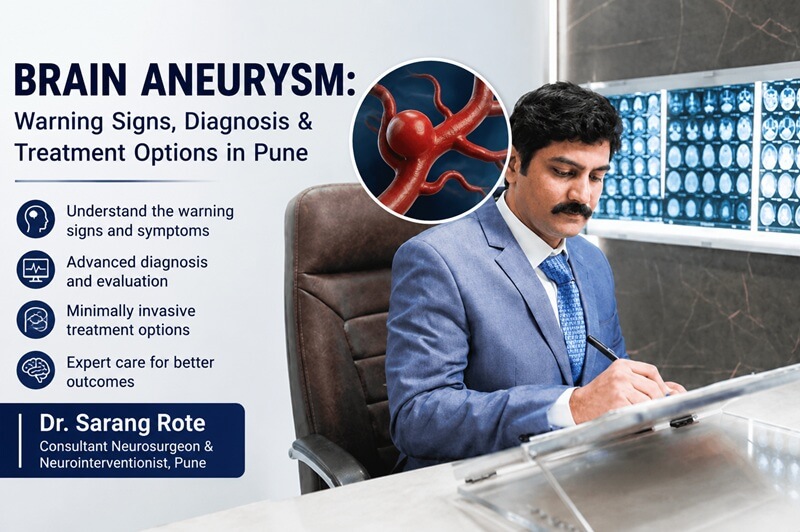
Brain Aneurysm: Warning Signs, Diagnosis & Treatment Options in Pune
A brain aneurysm is a weak or thin area in the wall of a blood vessel in the brain that can form a bulge or pouch. Many brain aneurysms may not cause noticeable symptoms, but a ruptured aneurysm can cause bleeding around the brain and requires immediate medical attention.
Understanding the warning signs, available diagnostic tests and treatment options can help patients and families seek appropriate medical care without unnecessary delay. If you or someone you know develops a sudden, severe headache or other symptoms suggestive of a ruptured aneurysm, emergency medical evaluation is essential.
What Is a Brain Aneurysm?
A brain aneurysm, also called a cerebral or intracranial aneurysm, occurs when a weakened area of a brain artery becomes enlarged or balloon-like.
Some aneurysms remain small and stable and may never rupture. Others can grow or rupture and cause bleeding in or around the brain. The risk and appropriate management depend on several factors, including the aneurysm's size, location, shape, symptoms, medical history and other individual considerations.
Brain Aneurysm Warning Signs
An unruptured brain aneurysm may not produce any symptoms, particularly when it is small. However, a larger aneurysm can sometimes press against nearby nerves or brain tissue and cause symptoms.
Possible symptoms of an unruptured aneurysm may include:
- Headache or pain around or behind the eye
- Blurred or double vision
- Changes in vision
- Numbness or weakness on one side of the face
- Difficulty speaking or concentrating
- Balance or coordination problems
- Seizures in some cases
Symptoms can vary depending on the size and location of the aneurysm.
Sudden Severe Headache: A Major Warning Sign
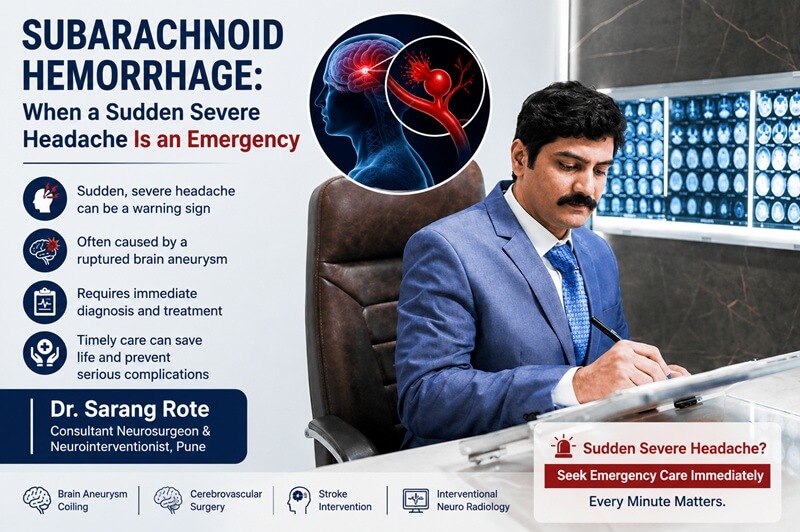
A ruptured brain aneurysm can cause bleeding around the brain, known as subarachnoid haemorrhage.
The most important warning sign is often a sudden and extremely severe headache. Patients may describe it as a sudden headache unlike anything they have experienced before.
Other possible symptoms include:
- Nausea and vomiting
- Neck stiffness
- Blurred or double vision
- Sensitivity to light
- Seizure
- Confusion
- Loss of consciousness
- Weakness or numbness
- Difficulty speaking
A sudden, severe headache accompanied by neurological symptoms should not be ignored. Immediate emergency medical evaluation is required when a ruptured brain aneurysm is suspected.
What Causes a Brain Aneurysm?
There is not always one identifiable cause of a brain aneurysm. Aneurysms may develop because of weakness in an artery wall and may be associated with a combination of genetic, medical and lifestyle-related factors.
Factors that may increase the risk include:
- High blood pressure
- Smoking
- Family history of brain aneurysm or haemorrhagic stroke
- Certain inherited conditions
- Some connective tissue disorders
- Polycystic kidney disease
- Previous blood vessel problems
Having one or more risk factors does not mean that a person will definitely develop or rupture an aneurysm. Individual assessment is important.
How Is a Brain Aneurysm Diagnosed?
The doctor may recommend imaging tests based on the patient's symptoms, medical history and clinical examination.
CT Scan
A CT scan can help identify bleeding in the brain, particularly when a ruptured aneurysm is suspected.
CT Angiography (CTA)
CT angiography can provide detailed images of the blood vessels of the brain and may help identify the size, shape and location of an aneurysm.
MRI and MR Angiography (MRA)
MRI provides detailed images of the brain, while MR angiography can help evaluate the blood vessels and identify certain aneurysms.
Cerebral Angiography
A cerebral angiogram uses a catheter and contrast material to produce detailed images of the brain's blood vessels. It may be recommended when more detailed information about the aneurysm and surrounding blood vessels is required.
Lumbar Puncture
In selected emergency situations, if a subarachnoid haemorrhage is suspected but initial imaging does not clearly demonstrate bleeding, a lumbar puncture may be considered by the treating medical team.
The choice of investigation depends on the patient's condition and clinical situation.
Brain Aneurysm Treatment Options
Not every unruptured brain aneurysm requires immediate treatment. Some small aneurysms may be monitored with regular imaging when the expected risk of treatment is greater than the estimated risk of rupture.
When treatment is recommended, the choice depends on factors such as:
- Size of the aneurysm
- Location of the aneurysm
- Shape and anatomy of the aneurysm
- Whether the aneurysm has ruptured
- Patient's age and overall health
- Family history and other risk factors
- Previous treatment or changes seen on follow-up imaging
Endovascular Coiling
Endovascular coiling is a minimally invasive treatment in which a catheter is guided through the blood vessels to reach the aneurysm.
Small soft coils are placed inside the aneurysm to reduce blood flow into the aneurysm and promote clot formation within it. In selected cases, additional devices such as stents may be used.
Brain aneurysm coiling may be considered depending on the aneurysm's size, shape, location and blood-vessel anatomy.
Flow Diversion
A flow diverter is a specialised stent placed inside the parent blood vessel to redirect blood flow away from the aneurysm. It may be considered for selected aneurysms, particularly certain larger or more complex aneurysms.
Whether flow diversion is appropriate depends on the aneurysm's anatomy and the patient's individual condition.
Surgical Clipping
Surgical clipping is an open neurosurgical procedure in which the surgeon accesses the aneurysm and places a small clip across its neck to prevent blood from entering the aneurysm.
Clipping may be appropriate for selected aneurysms depending on their location, shape and other clinical factors.
Observation and Regular Follow-Up
Some unruptured aneurysms may be managed without immediate surgery. In such cases, the doctor may recommend regular imaging and monitoring.
The decision to observe or treat an aneurysm should be made after carefully balancing the estimated risk of rupture against the risks associated with treatment.
Brain Aneurysm Treatment in Pune
Patients diagnosed with a brain aneurysm should be evaluated by a specialist experienced in cerebrovascular and neurovascular conditions.
Dr. Sarang Rote is a Consultant Neurosurgeon & Neurointerventionist in Pune. His areas of expertise include cerebrovascular conditions, neurointerventional procedures and stroke-related care.
His website lists Brain Aneurysm Treatment, Brain Aneurysm Coiling, Cerebrovascular Surgery and Stroke Intervention among his services.
The appropriate treatment depends on the individual patient's condition, aneurysm characteristics and overall health.
Why Choose Dr. Sarang Rote?
Choosing the right specialist is important when dealing with a brain aneurysm because treatment decisions can involve complex brain blood-vessel anatomy and different surgical or endovascular approaches.
Dr. Sarang Rote is a Consultant Neurosurgeon & Neurointerventionist in Pune with a focus on cerebrovascular conditions and neurointerventional treatment.
Patients may consider specialist evaluation with Dr. Sarang Rote because of:
- Expertise in cerebrovascular neurosurgery
- Experience in neurointerventional procedures
- Brain aneurysm treatment and coiling services
- Experience with surgical and endovascular approaches for selected cerebrovascular conditions
- Individual evaluation of aneurysm anatomy before treatment planning
- Focus on advanced and minimally invasive treatment approaches where clinically appropriate
The most suitable treatment is different for every patient. A specialist consultation helps determine whether observation, endovascular treatment or surgical treatment is appropriate.
When Should You Seek Emergency Medical Care?
A suspected ruptured brain aneurysm is a medical emergency.
Seek emergency medical attention immediately if someone develops:
- A sudden, extremely severe headache
- Loss of consciousness
- Seizure
- Sudden weakness or numbness
- Difficulty speaking
- Sudden vision problems
- Severe headache associated with vomiting or neck stiffness
Do not wait for the symptoms to improve on their own when a brain haemorrhage or ruptured aneurysm is suspected.
Can a Brain Aneurysm Be Prevented?
Not every brain aneurysm can be prevented, but managing certain risk factors may help reduce vascular health risks.
Important measures include:
- Keeping blood pressure under appropriate control
- Avoiding smoking
- Following a healthy lifestyle
- Discussing relevant family history with your doctor
- Following recommended imaging when monitoring an identified aneurysm
- Seeking medical advice for new or concerning neurological symptoms
Patients with a significant family history or certain medical conditions may need specialist advice about whether screening is appropriate.
Frequently Asked Questions About Brain Aneurysm
1. What is a brain aneurysm?
A brain aneurysm is a weakened area in a brain artery that forms a bulge or pouch. Many aneurysms do not cause symptoms, but some can rupture and cause bleeding around the brain.
2. What is the most important warning sign of a ruptured brain aneurysm?
A sudden and extremely severe headache is a major warning sign. It may occur with nausea, vomiting, neck stiffness, vision changes, seizure, confusion or loss of consciousness.
3. Can a brain aneurysm exist without symptoms?
Yes. Many unruptured brain aneurysms do not cause noticeable symptoms and may be discovered incidentally during brain imaging performed for another reason.
4. How is a brain aneurysm diagnosed?
Depending on the clinical situation, doctors may use CT, CT angiography, MRI, MR angiography or cerebral angiography. In selected situations, additional tests may be required.
5. Does every brain aneurysm require surgery?
No. Some small or low-risk unruptured aneurysms may be monitored with regular imaging. The decision depends on the aneurysm's size, location, shape, risk factors and the patient's overall health.
6. What is brain aneurysm coiling?
Coiling is an endovascular procedure in which a catheter is used to place small coils inside the aneurysm. The coils reduce blood flow into the aneurysm and help prevent further blood from entering it.
7. What is the difference between coiling and clipping?
Coiling is performed through the blood vessels using a catheter, while clipping is an open surgical procedure in which a clip is placed across the neck of the aneurysm. The appropriate option depends on the individual aneurysm and patient.
8. Can a brain aneurysm rupture without warning?
Yes. Some aneurysms can rupture without previously causing noticeable symptoms. This is why sudden severe neurological symptoms require urgent medical assessment.
9. Is a sudden severe headache always caused by a brain aneurysm?
No. Many conditions can cause severe headaches. However, a sudden, extremely severe headache can be a warning sign of a serious condition such as subarachnoid haemorrhage and should receive immediate medical evaluation.
10. Who should I consult for a brain aneurysm in Pune?
A patient with a suspected or diagnosed brain aneurysm should be evaluated by an appropriate specialist such as a neurosurgeon or neurointerventional specialist. Dr. Sarang Rote is a Consultant Neurosurgeon & Neurointerventionist in Pune with expertise in cerebrovascular and neurointerventional care.
Conclusion
A brain aneurysm may remain silent for years, but a rupture can cause life-threatening bleeding and neurological complications. Recognising warning signs, obtaining appropriate imaging and receiving specialist evaluation are important steps in managing the condition.
Treatment is not the same for every aneurysm. Depending on the patient's condition, doctors may recommend observation, endovascular coiling, flow diversion, surgical clipping or another appropriate treatment strategy.
If you have been diagnosed with a brain aneurysm or are experiencing concerning neurological symptoms, consult a qualified specialist for an individual evaluation.
#BrainAneurysm #BrainAneurysmTreatment #BrainAneurysmPune #BrainAneurysmCoiling #NeurosurgeonInPune #Neurointervention #CerebrovascularSurgery #BrainHealth #StrokeAwareness #DrSarangRote




.jpeg)